

Why have co-fermented coffees started to create their own category?
- Doğukan İbidan
- 21 Oca
- 3 dakikada okunur
In recent years, the coffee industry has undergone a major transformation in processing techniques. Producers are turning to innovative processing methods to both cater to niche markets and achieve higher prices. At the heart of this transformation are co-fermented and infused coffees .
Today, it's become commonplace to see co-fermented coffees at many coffee fairs, in the hands of quality roasters, and competing baristas. This indicates that these coffees are beginning to become a category in their own right, much like washed, natural, honey, or anaerobic coffees.
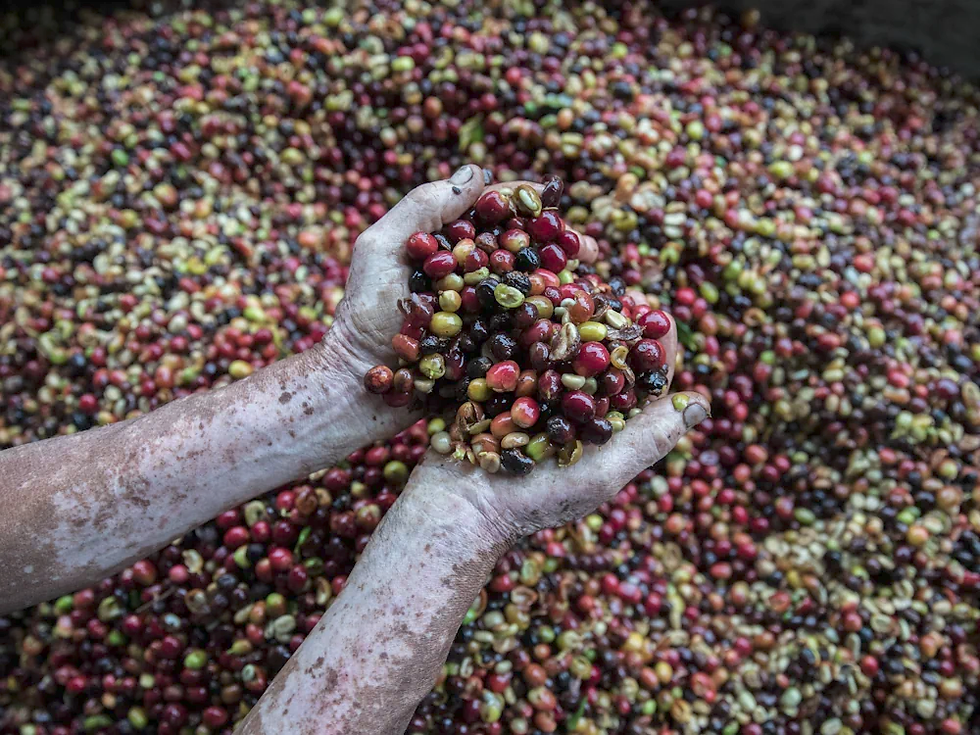
The Rise of Co-Fermented and Infused Coffees
Co-fermented and infused coffees first began to appear in the late 2010s. While they don't have a precise definition, they generally refer to coffee being processed during the fermentation stage with natural ingredients—such as fruit or spices.
Through these methods, producers can:
It can create much stronger and more distinct flavor profiles,
It can open up to new markets,
By increasing their points, they can sell their products at higher prices.
Despite all these advantages, in the early days, some in the industry were very skeptical of these methods. Some argued that these coffees compromised the principles of "transparency" and "naturalness."
According to Luis, an agronomist with 16 years of experience, these coffees need to be clearly labeled: “The consumer needs to know that the cup has been processed differently than traditional methods. This ensures that expectations are managed correctly and the value of the unique sensory experience is accurately conveyed.”
Today, however, the situation has changed. Co-fermented coffees are now more frequently featured on specialty coffee menus, attracting more visitors to stands at trade shows, and becoming part of the collections of high-quality roasters.
As Diversity Increased, Categorization Became Inevitable.
While it remains uncertain whether the industry will fully embrace co-fermented coffees, rapid growth suggests these coffees are now here to stay.
New debates are now emerging on two different fronts:
Natural ingredients or artificial flavor?
Taste modification or taste enhancement?
Co-fermentation aims to alter the taste profile of coffee by adding new fruits or ingredients. Yeast inoculation, on the other hand, aims to enhance flavors by fermenting existing sugars with microorganisms.
This diversity reinforces the idea that co-fermented coffees should have their own category, just like washed, natural, or honey coffees.
Luis explains the situation as follows: “Co-fermentation can be done within any of the three major processing models — washed, honey, natural. Therefore, it needs to be a separate category so that the consumer can better understand the process.”

Why is Categorization Important?
The biggest problem with co-fermented coffees is that the concepts are still getting confused:
Infused
Co-fermented
Flavoured
The confusion between these terms is both confusing for consumers and fueling debates about transparency in the industry.
Thanks to categorization:
Consumer expectations are being managed correctly.
The production process is being conveyed more accurately.
Transparency is increasing in the value chain.
Producers are finding markets that suit them better.
This process is similar to how other experimental methods, such as lactic, anaerobic, or carbonic maceration, have gradually gained acceptance. Some taste profiles that were once considered "defects" have now been transformed into specialized processing methods sold at high prices.
Further Research is Needed
Although co-fermentation is now a rapidly growing field, it still requires standardized scientific data. Luis says about this: “Clear scientific definitions of co-fermentation should be established. Technical standards should be created. Lack of information leads to misunderstandings.”
Similarly, co-fermented coffees behave completely differently during the roasting and brewing stages:
Core density is changing,
The coloring process is different,
Roasting curves need to be redesigned.
Therefore, accurate information is of great importance to both producers and roasters.
Co-fermented coffees are now the newest player in the game.
Five years ago, these coffees were considered controversial, but today they are becoming an increasingly accepted category. Many connoisseurs of quality coffee are eagerly anticipating the discovery of new aromatic worlds. With increasing categorization and scientific clarity, it is highly likely that co-fermented coffees will secure a lasting and strong place in the specialty coffee sector.
These innovative processing methods seem poised to redefine the boundaries of the coffee world in the years to come.


