

The Story of Finca Soledad and Pepe Jijón
- Meet Lab Coffee
- 14 Tem 2025
- 10 dakikada okunur
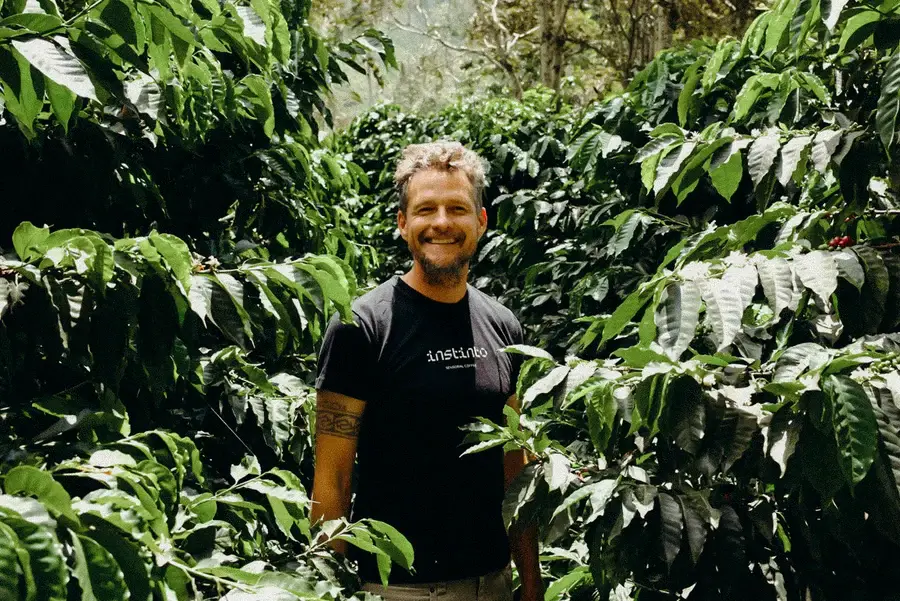
The cloud-forest-lined mountain landscape of the Intag Valley. Located at an altitude of approximately 1,500 meters in Ecuador's Imbabura region, Finca Soledad is renowned for its year-round fog and rich biodiversity. This high-altitude environment gives its coffees a complex acidity, balanced floral tones, and aromas of dark berries. Finca Soledad's founder, José Ignacio "Pepe" Jijón, was once a mountaineer who scaled the highest peaks on the continents. Born in Brazil in 1970, Pepe demonstrated his admiration for the natural world by soloing seven peaks on each continent and climbing Mount Everest for the fourth time. His life was altered by a wrist injury sustained in a motorcycle accident. Pepe purchased land in the Intag Valley to seek refuge. He named this land "Soledad" (Spanish for "solitude"), initially planning to plant only trees, but at the suggestion of local farmers, coffee trees were also planted. In those years, Pepe almost never consumed coffee, explaining his goal as returning to nature and finding peace.
Located in Ecuador's Intag Valley , Finca Soledad rises from the clouds as a captivating coffee farm. This special farm, thanks to Pepe Jose Jijon 's love of nature and conservation mission, has become the birthplace of coffee. Only approximately 4 hectares of the farm, encompassing a total of 120 hectares, are used for coffee cultivation . Finca Soledad stands out for its highly biodiverse ecosystem and for offering some of the world's most desirable coffee flavors.
Pepe's early years in this new adventure were challenging. He had no farming experience, and the infrastructure was being built from scratch. Establishing his coffee farm, which he describes as "more difficult than conquering Mount Everest," became his biggest challenge. But over time, Pepe's hard work and determination paid off. In 2023, the international coffee community Sprudge named Pepe Jijón "Most Important Coffee Producer" for Finca Soledad. The Guardian newspaper further cemented Finca Soledad's reputation by describing him as "the producer of world-sought coffee." While Pepe's awards may not be significant, the vision he established and the difference he made leave a lasting legacy. He has made it his mission to support his family and the people of his village, to promote conscious coffee consumption, and to raise environmental awareness.

Vision, Values and Sustainability Approach
Pepe Jijón sees coffee production at Finca Soledad as more than just a simple task, but a "triumph of the human spirit." The farm is a tropical agroforestry managed with biodynamic and organic principles. Of the 120 hectares of land, only 8 hectares are dedicated to coffee cultivation; the remaining extensive forest area is protected and wildlife is supported. Pepe and his team maintain the soil's vitality by allowing epiphytes like orchids and ferns to flourish alongside the coffee trees. Finca Soledad is also an exemplary social project; Pepe and his family provide jobs and livelihood support to parents facing hardship.
Pepe's understanding of sustainability is based on a vision that demands direct action. The "wave" fermentation methods he has adopted use controlled temperature changes to preserve the vitality of the coffee bean. This process allows the bean to store energy, avoiding unnecessary stress. For example, in varieties like Sidra and Geisha, anaerobic or controlled fermentation tanks are used to carefully manage the natural transformation of yeast and bacteria within the coffee. Pepe describes these methods as "mimicking the silent language of nature." As a result, Finca Soledad coffees present the pure form of rare varieties processed with this sensitive approach in elegant and complex cups. In other words, the entire process, from coffee field to cup, is carried out with respect for nature and fair trade principles.
Coffee Varieties Grown in Finca Soledad and Their Characteristics
Three rare coffee varieties stand out at Finca Soledad: Typica Mejorado , Sidra , and Geisha . Pepe Jijón aims to introduce these varieties to the world of coffee literature as "unique expressions of Ecuadorian terroir." While the microclimates in which each variety grows are similar, their flavor profiles and processing methods differ.
SYDRA WAVE WASHED
Processing Method
After being hand-harvested, the coffee is sorted through a water-free dry cleaning process. This preserves the natural microbial structure and wild yeasts. The cherries are fermented in closed tanks for 72 hours, then the pulp is removed, thoroughly washed, and gently dried in a climate-controlled, darkroom.
Tasting Profile
• Aroma: Yellow fruits & herbal notes
• Warm Taste: Star fruit acidity, a round body ending in pear
• As it cools: A “green, fresh and crisp” texture with notes of lemongrass, herbal botanicals and light syrup
• Body: Thick and dense (thicc)
• Overall Impression: Fresh, bright, green character; perfect balance of botanicals with sweetness
GEISHA WAVE WASHED (PANAMA SEEDS)
Processing Method
The cherries are pulped and washed with fresh spring water the same day. They are dried on raised beds for 30 days. Most of the drying takes place in a climate-controlled darkroom to preserve the flavor balance.
Tasting Profile
• Aroma: Intense floral structure and blueberry
• Warm Taste: Full and floral with lemon tea and blueberry
• As it cools: A “floral lemonade” vibe with notes of jasmine, guava and lemon
• Body: Soft, elegant and round
• General Impression: An elegant floral structure with bright acidity; a complex and refined acidity base
TYPICA MEJORADO FULLY WASHED (PUTUSHIO)
Processing Method
The cherries are pulped the same day, washed with spring water, and slowly dried on raised beds for 30 days. Balanced moisture reduction optimizes flavor development.
Story
This newly established high-altitude farm in Putushio, at an altitude of 2222 masl, is home to a 3000-year-old archaeological heritage. The coffees produced in this mystical and foggy region perfectly showcase the genetic expression and terroir of Typica Mejorado.
Tasting Profile
• Flavor: Date, brown sugar and raw sugar
• Warm Taste: Sweet and smooth with warm spices like cane sugar, butter, cinnamon
• As it cools: Impression of warm red apple tart flavored with rose water
• Body: Comfortable and voluminous
• General Impression: Spicy and sweet beginning, elegant finish balanced with floral and apple notes
TYPICA MEJORADO TYOXIDATOR
Processing Method
The tyrosiderata treatment aims to impart oxidative character. Cherries are aerobically fermented in the open air, then the pulp is removed dry and the mucilage ferments in GrainPro bags for 48 hours. Drying is completed in a darkroom for 20 days in direct and indirect sunlight.
Tasting Profile
• Aroma: Intense dried fruity; grapes and figs
• Hot Taste: Panela sugar, plum (prune), pomegranate
• As it cools: Dates, hibiscus and butter body
• Body: Sweet, dense and silky
• Overall Impression: A complex sense of sweetness and intensity on a juicy red fruit base
Why a Climate Controlled Darkroom?
Purpose: To make the drying process more controlled , slow , balanced and protected against oxidation .
Technical and Sensory Contributions:
Benefits | Explanation |
1. Humidity control | Constant temperature and humidity allow for more uniform water distribution and evaporation within the core. This balances water activity (aw) and increases storage stability. |
2. Acidity & flavor clarity | Slower drying → more stable organic acids → more vibrant and elegant acidity . This highlights notes such as lemon blossom and bergamot, especially in varieties like Geisha. |
3. Stopping fermentation | Drying at controlled temperature prevents the growth of unwanted microorganisms, which promotes a clean, crisp, “clean cup” profile . |
4. Color & surface quality | Drying in direct sunlight can cause a "shock" effect on the beans: cracks, discoloration. A dark environment reduces this risk. |
5. Management of enzymatic reactions | Slow drying allows certain enzymatic processes to operate more efficiently, allowing complex profile elements such as floral and tropical flavors to be preserved. |
6. Storage durability | Since the targeted water activity (aw) is achieved in a healthier way, coffee maintains its freshness for longer and aging slows down. |
What is Wave Washed?
Wave Washed is a modern, specialized coffee processing method that incorporates innovative variations on the traditional washed processing method. While there is no single standard definition, it is a subcategory of "micro-washed" or "experimental washed" that incorporates techniques developed by individual producers.
Wave Washed is the classic washed method:
• more controlled
• longer term
• with more complex fermentation stages
• It is an enriched version with more balanced drying techniques.
Typical Features:
Feature | Explanation |
Fermentation | Aerobic or anaerobic fermentation is often carried out in sealed tanks for 48–72 hours. |
Washing | A detailed and complete wash is applied with fresh spring water. |
Drying | It is usually done for long periods (20–30 days), in the shade or in AC-controlled dark rooms. |
Dry pretreatment | In some versions, the cherries are dry-cleaned before being washed. |
Aim | Controlling fermentation at a micro level, bringing flavor clarity , cleanliness and floral/tropical notes to the fore. |
Why Is It Called “Wave”?
• The reason why this process is called “wave” is that the process is “more refined”, “more elegant”, almost like a wave of taste, compared to the traditional method, and this wave is felt in the cup profile.
• It can also be a marketing strategy that refers to the Third Wave Coffee movement.
Differences Between Wave Washed and Classic Washed:
Feature | Classic Washed | Wave Washed |
Fermentation | Short-term (usually outdoors) | In a long, controlled, closed tank |
Drying | 8–15 days in the sun | 20–30 days in shade or AC room |
Taste profile | Clean, classic, citrus | Floral, sweet, complex, clear |
Microbial effect | Low | Highly controlled fermentative effect |
Panama Seeds ?
In the coffee world, "Panama seeds" refer to seeds of coffee varieties developed or renowned in Panama. These seeds are planted in other countries to improve quality and diversify their profiles .
Which Varieties in Particular?
Panama is particularly famous for its following varieties:
Variety | Features |
Geisha | Floral, tea-like body, high acidity, very complex |
Typica Mejorado | Elegant, peachy/fruity tones, high cup score |
Catuai, Caturra, SL-34 | Some evolved in the stabilized Panamanian microclimate |
Why Plant Panama Seeds in Other Lands?
Aim | Explanation |
1. Improving quality | Panamanian varieties score particularly highly in Cup of Excellence and competition coffees. Other countries aim to emulate this genetic quality. |
2. Expanding into the premium market | Coffee produced from “Panama Geisha” seeds carries label value and provides pricing power even if it is grown in another country. |
3. Exploring different terroir influences | When the same seed is grown in different soils, climates, and altitudes , terroir influences create different flavors . This variety can be marketed as an "origin project." |
4. Adaptation trials | Panama seeds are used in research such as whether they are resistant to climate change or have high yields. |
5. Genetic protection & innovation | Some producers want to use these seeds to develop their own new varieties (e.g. natural hybrids). |
Examples of Wild Yeast Species Found in Coffee
Genus / Species | Explanation |
Saccharomyces cerevisiae | It is one of the most common yeasts. It produces ethanol and is one of the main actors of fermentation. |
Pichia kluyveri | It produces esters (fruity aromas) and provides richness of aroma. |
Hanseniaspora uvarum | It is dominant in early fermentations; it increases acidity and offers fresh flavors. |
Candida parapsilosis | It develops slowly but contributes to the depth of fermentation. |
Torulaspora delbrueckii | It likes low pH and high sugar environments; it provides aroma stability. |
Metschnikowia pulcherrima | It has an antimicrobial effect and can suppress unwanted bacteria. |
Where Are They Found?
Area | Explanation |
Cherry bark (pericarp) | They are naturally found on the surface. They are fermentation starters. |
Harvesting equipment | Permanent yeast colonies may develop on surfaces such as washing tanks, baskets, etc. |
Soil and environment | It may already be present in the farm's natural ecosystem. |
Processing equipment | If hygiene levels are low, some species may multiply uncontrollably. |
What are their uses in fermentation?
• They convert sugars into ethanol and CO₂
• They form aroma precursor compounds (ester, aldehyde, acid, etc.)
• They prevent the proliferation of unwanted microorganisms by lowering the pH.
• Some varieties highlight the floral, fruity and tropical profile of coffee
Impact on Cup Profile:
Yeast Type | Flavor Effect |
Saccharomyces | Body, sweetness, alcohol-like warmth |
Hanseniaspora | Bright acidity, fruity touches |
Pichia | Strawberry, pineapple, tropical notes |
Candida | Mild fermentative complexity |
Purposes of Using Natural Spring Water
1. Cleaning Quality (Physical Cleaning)
• Natural spring water generally contains low turbidity , microorganisms and pollutants .
• Mucilage (sugar layer) and fermentation residues on the coffee bean are removed more effectively.
• This creates a “clean cup” in the cup profile, that is, a clean, bright and clear cup profile .
2. Microbiological Safety
• Unpurified but clean natural spring water does not contain unwanted bacteria and fungi.
• Thus, after fermentation , no spoilage, mold or rotten tastes occur in the beans.
• At the same time, the low pH of the spring water prevents the growth of some undesirable microorganisms.
3. Effect on Sensory Quality
• Spring water generally has a balanced mineral content (e.g. Ca²⁺, Mg²⁺ are low – Na⁺ ratio is stable).
• This ensures a more neutral and homogeneous purification of microbial residues adhering to the surface of the core.
• Unwanted metallic, muddy and earthy tastes in coffee are prevented.
4. pH and the Role of Minerals
• The natural pH of water is generally in the range of 6.5–7.2 → which neutralizes any acidic or basic residues on the surface of the bean.
• Controlled pH environment → contributes to the preservation of aromatic acids (citric, malic, phosphoric).
5. Terroir and Expressive Power
• The content of the spring water is specific to the region → therefore it is also included in the final stage of terroir (processing stage).
• For some producers, this means preserving the local character of the coffee, not only in the soil but also in processing .
"To impart oxidative character" means to develop specific aroma and taste characteristics through controlled oxygen exposure, especially in fermented or matured products such as coffee, wine and tea.
In the Context of Coffee:
To impart oxidative character to the coffee bean or fruit:
during the fermentation or drying process
It is the process of gaining certain taste, aroma and structure changes as a result of contact with oxygen .
Technical Description of the Oxidative Process:
In the presence of oxygen , sugars, phenolic compounds and amino acids undergo various reactions.
In this process:
Aroma compounds such as aldehydes , esters , alcohols and organic acids are formed.
Maillard precursors (sugar + amino acid) may be formed.
At the same time, some antioxidant compounds (e.g. chlorogenic acids) are broken down → which can make a difference in sweetness and body.
When and How to Earn?
Stage | Oxygen Contact | Conclusion |
Aerobic fermentation | Cherries are kept in tanks open to oxygen. | Mild oxidative fermentation begins |
Waiting after dry depulping | Pulped seeds are kept | Fruity, winey flavors |
Slow open air drying | Long drying in sunlight | Mild oxidative flavors, low acidity |
Post-fermentative soaking | Soaking in water after washing (sometimes) | Mild oxidative softening |

Pepe Jijón's story is the germination of not just a farm, but a philosophy. He planted not just seeds in the soil, but also patience, love, and responsibility. Through his vision, Finca Soledad evolved into a living space at peace with nature, respectful of human dignity, and shaped by the essence of coffee. His commitment to sustainability is a stance against the notion of disposable profit, and every coffee cherry he grows is a silent yet powerful testament to this stance. Pepe Jijón, who sees coffee not just as a beverage but as a cultural narrative, a sensory experience, and an ethical responsibility, reminds us that not only good coffee but also a better world is possible. His path is a journey that begins with coffee but ends with humanity.
DOĞANAY EMRE KURTULUS


